
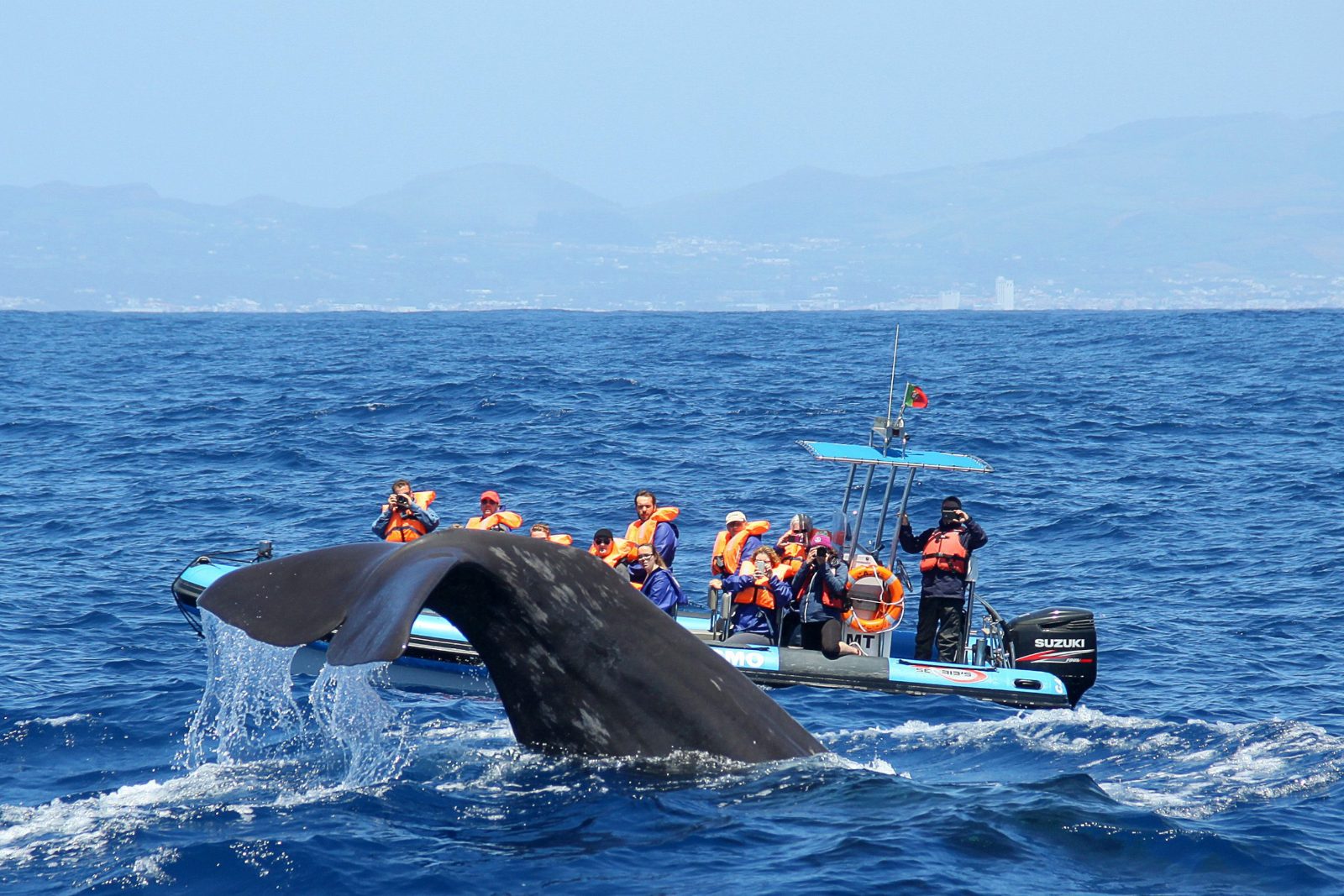
Whale Watching Horta
Migration Guide

What Is the Season for Whale Watching

The waters surrounding Faial Island host one of the Atlantic's most reliable cetacean populations, with documented sightings spanning eight months of the year. Understanding which species pass through and when they arrive turns a hopeful outing into a strategic plan. This guide maps the season for whale watching around Horta, breaking down migration windows, resident behaviour, and the months when offshore conditions align with peak animal movement.

8 min read Updated 2026-08-19 Fact-checked
What Is the Season for Whale Watching

Quick answer

The season for whale watching around Faial Island runs from April through October, with the highest concentration of sightings between May and September. Resident sperm whales remain in the region year-round, while migratory baleen species—including blue whales, fin whales, and sei whales—pass through between April and June during their northbound journey. Dolphin pods, particularly common dolphins and bottlenose dolphins, are active throughout the season.

Faial Island lies along the Mid-Atlantic Ridge, a submarine mountain range that funnels nutrient-rich currents into the Azores archipelago and creates one of Europe's most concentrated feeding grounds for large cetaceans. More than twenty species have been catalogued in these waters, and unlike coastal whale-watching regions dependent on brief migratory pulses, the Azores support a resident population of sperm whales that hunt the deep channels between islands throughout the year. What is the season for whale watching in practical terms depends on which animals you hope to encounter. Sperm whales form the backbone of sightings from April onward, with adult males and mixed nursery groups frequenting the waters off Horta's marina. Baleen whales arrive in spring: blue whales and fin whales pass through the Azorean corridor in April and May as they migrate north toward Arctic feeding zones, while sei whales linger into early June. By mid-summer, the focus shifts to resident species and smaller cetaceans—Risso's dolphins, Atlantic spotted dolphins, and striped dolphins—that follow baitfish aggregations along the island's southern shelf. Pilot whales, both short-finned and long-finned varieties, appear sporadically but reliably from June through September. Historically, Faial served as a hub for American whaling fleets in the nineteenth century, and the island's lookout stations—once manned by whalers scanning for spouts—now guide research vessels and commercial tours toward real-time sightings. This network of vigias, stone watchtowers positioned on clifftops around the island, remains in use today, linked by radio to boats operating out of Marina da Horta. The system enables operators to respond to confirmed whale activity rather than search blindly, which dramatically improves encounter rates and reduces the time spent at sea. October marks the trailing edge of the whale watching calendar. Sea conditions deteriorate as Atlantic storm tracks shift south, and migratory species begin their return journey or move offshore into deeper oceanic zones. While sperm whales remain present, tour operators reduce frequency and eventually suspend trips until the following spring. The window from May through September captures the season's full breadth: stable weather, overlapping migration phases, and the highest diversity of species in a single outing.

“Faial's vigia network, once used to hunt whales, now guides boats toward real-time sightings across eight months of the year.”
Timing

What Is the Season for Whale Watching on Faial Island

The prime window for whale watching on Faial Island spans from April through September, aligning with the migration patterns of diverse cetacean species. During this period, the warmer Atlantic waters attract both resident and migratory whales, maximizing the probability of sightings.

Spring (April–June)

Moderate crowds

15°C–18°C; high migration activity. Large baleen whales, such as blue and fin whales, pass through the Azores during their northern migration.

Summer (July–September)

High crowds

20°C–24°C; stable sea conditions. Resident species like sperm whales are frequently present, alongside various dolphin species.

Autumn (October–November)

Low crowds

16°C–20°C; variable sea states. Sightings become less frequent as migratory species depart, though resident populations remain active.

Verdict: The best opportunity for sightings is from April to July, when migratory diversity is at its highest.

Opening hours

Operating Hours During What Is the Season for Whale Watching

Tour operators at Marina da Horta maintain a consistent daily schedule to accommodate visitors seeking excursions.

Monday
09:00–18:00
Daily departures
Tuesday
09:00–18:00
Daily departures
Wednesday
09:00–18:00
Daily departures
Thursday
09:00–18:00
Daily departures
Friday
09:00–18:00
Daily departures
Saturday
09:00–18:00
Daily departures
Sunday
09:00–18:00
Daily departures
For the best conditions and visibility, visitors should plan to arrive between 09:00 and 14:00.
Directions

How to Reach the Harbor During What Is the Season for Whale Watching

Marina da Horta sits along the southeastern shore of Faial Island, serving as the primary departure hub for regional marine excursions. The harbor is easily reached via direct coastal roads, airport taxis, or passenger ferries from nearby Pico Island.

Taxi 10 min 15–20 EUR

Horta Airport (HOR) taxi stand to Marina da Horta

Bus 17 min 1.50 EUR

Farias Bus from Faial Airport to Santa Cruz - Forte

Boat 30 min 3.80 EUR

Atlânticoline ferry from Madalena (Pico) to Horta Ferry Terminal

Car 10 min

ER1-1A road from Horta Airport to Marina da Horta

Plan to reach the harbor during the recommended 09:00–14:00 arrival window, as morning and early afternoon slots offer the best conditions and visibility for sightings. There is a 0 EUR entrance fee to access the public marina, but parking spaces near the docks are limited and fill up quickly.

Nearby

Nearby Attractions for What Is the Season for Whale Watching

Visitors often combine whale watching departures from Marina da Horta with brief explorations of the surrounding historical and cultural landmarks. These sites are located within walking distance of the marina, allowing for a structured itinerary before or after your time on the water.

Peter Café Sport

1 min walk

This historic establishment is located directly across from the marina and serves as a central hub for maritime history. It provides a quiet space to review whale watching logs or study local marine life displays before your excursion.

Horta Regional Museum

10 min walk

Housed in a former Jesuit college, this museum details the social and religious history of Faial Island. It offers context to the island's heritage that complements the maritime focus of your visit.

Scrimshaw Museum

1 min walk

Located upstairs at Peter Café Sport, this collection features intricate engravings on whale teeth and bones. It provides essential historical perspective on the whaling industry that once defined the local economy.

Church of São Salvador

5 min walk

This 17th-century church features gilded woodwork and historical tiles characteristic of Azorean religious architecture. It offers a calm setting for reflection within close proximity to the waterfront.

Book

Check availability

Frequently asked

FAQ: what is the season for whale watching?

Everything you need to know about what is the season for whale watching

When is the peak Azores whale watching season?

The primary window runs from spring through autumn, with different species peaking at different times. If you are wondering what is the season for whale watching with the highest diversity of species, planning your trip between April and September offers the most variety. During these months, migratory baleen whales cross paths with resident species.

What months are best for a Horta whale watching tour?

Most visitors prefer booking a Horta whale watching tour between June and August when sea conditions are warmest and calmest. However, if your main goal is to spot the massive blue or fin whales, you should target the spring migration instead. March to May provides the best chance of encountering these colossal marine mammals.

What time of year is best for observing cetaceans in Horta?

Resident sperm whales and dolphins can be encountered during any month of the year when conditions permit. That said, observing cetaceans in Horta is easiest when the summer sun keeps the ocean calm. For travelers asking what is the season for whale watching with the most stable weather, July and August remain the peak.

Are migrating blue whales spotted during the spring whale watching period?

Yes, spring is the primary window for spotting these migrating giants as they travel north to their feeding grounds. If you want to know what is the season for whale watching for blue, fin, and sei whales, the period from mid-March to late May is your target. Marine biologists accompany these trips to monitor their local feeding behaviors.

Is it possible to see sperm whales outside the main summer season?

Yes, sperm whales and three dolphin species reside in these deep volcanic waters year-round. Although these animals are present, the colder months bring unpredictable Atlantic swells that frequently ground boats. Anyone researching what is the season for whale watching should prepare for potential delays and schedule multiple backup days if visiting in winter.

Do weather conditions often cancel trips during the shoulder season?

High winds and heavy ocean swells can cancel departures in any month of the year. If you book during the spring or autumn shoulder periods, sea states tend to be more variable than in the summer. We recommend booking your excursion for the first day of your visit so you have flexibility if a cancellation occurs.

Are child-friendly boat trips available throughout the active season?

Yes, families can join excursions, but operators may restrict infants from joining trips on smaller rigid inflatable boats. Larger catamarans depart from the Marina da Horta and provide a much more stable option for children. You can verify vessel availability and safety guidelines with the providers before your scheduled departure.

Keep reading

More guides & pages