Whale Watching Horta
Tours & tickets

Hand-picked by our editors — the 5 best marine expeditions from 12 operators reviewed

Open today 09:00–20:00
Attendance: Moderate — summer season
Arrive by 14:00 for the afternoon tour briefing.
Free cancellation Instant confirmation Mobile voucher Verified partner Marine biologist on board
Tickets

Choose your ticket

Verified partners for every tour, free cancellation where available, and instant confirmation on every booking.

Whale & Dolphin Watching Expedition from Horta 4 hr
Standard Entry

Whale & Dolphin Watching Expedition from Horta

4.9 (36)
€80
per person
Instant Mobile voucher Flexible — change up to 24h

Search for sperm whales and dolphins on a thrilling Atlantic boat tour led by expert marine guides.

Reserve
Marine Research Whale & Dolphin Expedition 3 hr
Standard Entry

Marine Research Whale & Dolphin Expedition

4.8 (115)
€86
per person
Instant Mobile voucher Flexible — change up to 24h

Science-led cetacean expedition with PhD researchers collecting live data in the Atlantic

Reserve

Prices from verified partners. Availability updates in real time at checkout. Free cancellation policies apply where shown.

Highlights

What you'll see inside the attraction

The landmarks, rooms, and views travelers on this tour remember — all visible on a single visit.

Horta Marina

Famous for its colorful walls painted by visiting sailors from around the world. It serves as the departure point for your horta whale watching tour.

Whaling lookout vigias

Traditional land-based observation posts used to guide the horta whale watching tour boats to cetaceans.

Marine Research Lab

On-board research facility where scientists collect data during each horta whale watching tour.

Porto Pim Bay

A protected bay with historical forts and a beach, perfect for relaxing after your horta whale watching tour.

Monte da Guia

A volcanic crater with panoramic views of the harbor and the Atlantic Ocean.

Head to head

Horta Whale Watching Tour vs Pico Island Departures

They complement each other, though most visitors who seek a sophisticated marina atmosphere find the horta whale watching tour to be more logistically convenient for Atlantic ocean excursions. The Pico experience remains the preferred choice for those wanting closer proximity to deep-water canyons where marine mammals frequently aggregate.

Feature Top pick Horta (Faial) Pico Island
Departure Point
Madalena or Lajes Harbor
Vessel Variety
Zodiacs and traditional boats
Sighting Spotters Used
Land-based Vigias
Travel Convenience
Requires ferry transit
Weather Resilience
Moderate, coastal dependent
Island Atmosphere
Quiet coastal village

Verdict: Choose the horta whale watching tour for seamless access to horta whale watching tour tours, or select Pico for a more rugged maritime immersion when securing horta whale watching tour tickets for your next sea adventure.

How your ticket works

Book your ticket in 3 steps

  1. 01

    Book online

    Choose your ticket, select your date, and reserve in under two minutes. Secure checkout handled by our verified partner.

  2. 02

    Receive your mobile voucher

    Instant confirmation by email, with a mobile voucher you can save offline. No printing, no queuing at a collection desk.

  3. 03

    Show & enter

    Arrive at the entrance, show your voucher on your phone, and walk in. Most tickets include priority or skip-the-line access.

Plan your visit

Everything you need to know before you go

Practical details for your visit straight from our verified partners — hours, access, rules, and how to get there.

Open today · 09:00–20:00
Opening hours
09:00–20:00 daily
Address
Cais de Santa Cruz, Loja A1, 9900-026 Horta, Faial, Azores, Portugal
Office access
Free admission to booking office (0 EUR)
Best arrival window
09:00–14:00 (for tour briefings)
Storage
Not available at the booking office
Navigation
Located at Horta Marina near the harbor entrance
Mon
09:00–20:00
Tue
09:00–20:00
Wed
09:00–20:00
Thu
09:00–20:00
Fri
09:00–20:00
Sat
09:00–20:00
Sun
09:00–20:00
Location

Address
Cais de Santa Cruz, Loja A1, 9900-026 Horta, Faial, Azores, Portugal
Storage
Not available at the booking office
Navigation
Located at Horta Marina near the harbor entrance

Dress code

Wear warm, layered clothing as ocean breezes are common. Avoid high heels for safety on the boat.

Bags & security

Keep belongings minimal. Use a waterproof bag to protect electronics from salt spray.

Photography

Photography is permitted. Use a strap for cameras and ensure lenses are protected from sea spray.

Accessibility

The semi-rigid boats are not suitable for those with back/hip problems, recent surgeries, or pregnancy.

What to bring

  • Warm jacket
  • Sunscreen
  • Sunglasses
  • Hat with chin strap
  • Waterproof gear
  • Camera

Not allowed

  • Drones
  • Feeding animals
  • Diving
  • High heels
  • Large luggage
  • Sharp objects
  • Open food containers
  • Alcoholic beverages

Families & strollers

The horta whale watching tour is family-friendly, though not recommended for children under 5 years old.

Food & drink

Food and drinks are not included on the horta whale watching tour; please consume refreshments beforehand.

Around your visit

Everything else worth knowing

Best time to go, insider tips, nearby landmarks, and the cancellation fine print — flip through to skim what matters to you.

Cancellation policy

Flexible, no hidden fees.

Trips are weather-dependent and may be rescheduled. Full refunds are provided in the event of cancellation.

About

The place, in context

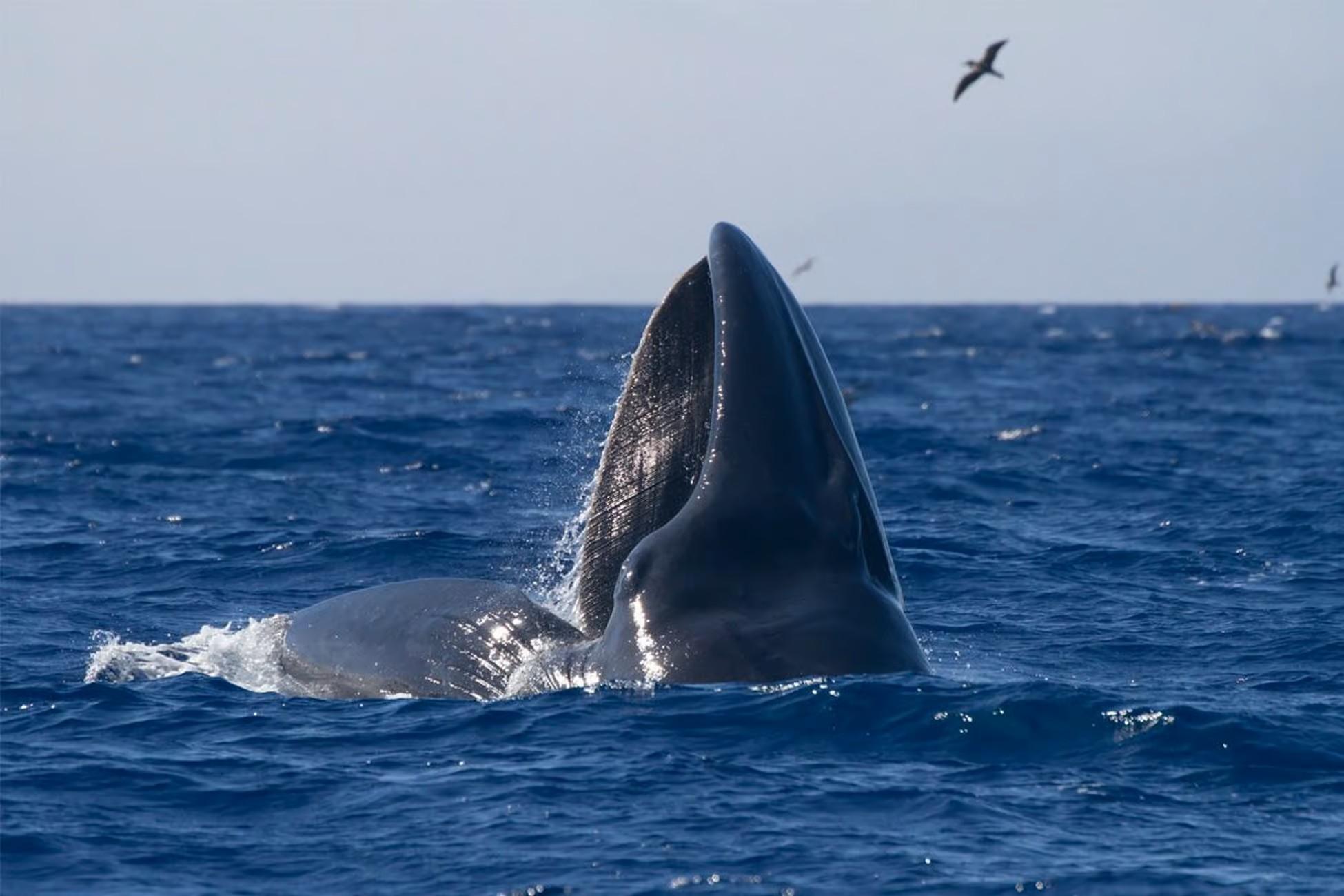
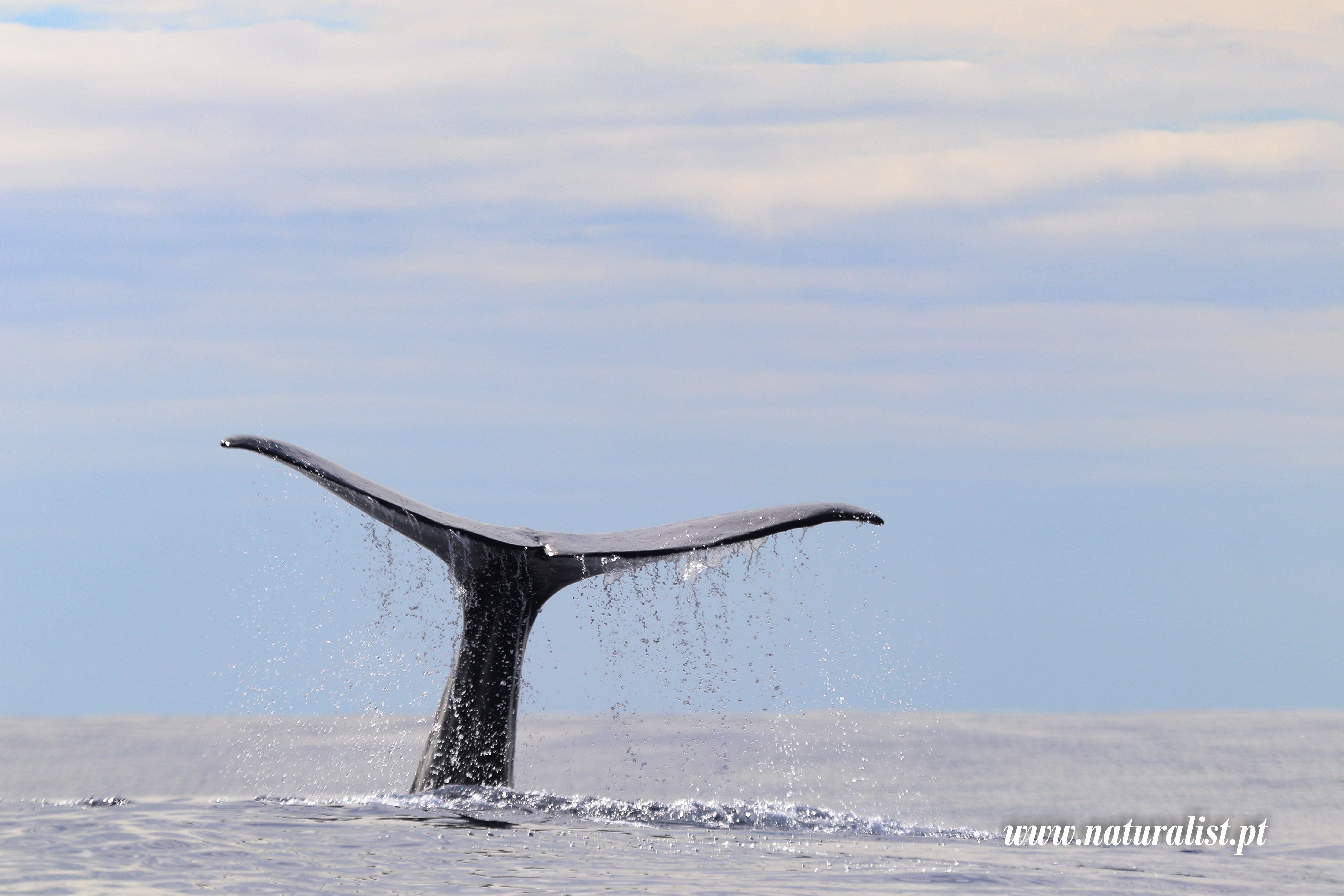
The waters off Horta host sperm whales year-round, a residency pattern recorded nowhere else in the Azores with such consistency. The Condor Seamount and Princess Alice Bank lie within two hours' sail, their submarine topography funneling nutrient-rich currents that sustain squid populations and the cetaceans that hunt them. Marine biologists working from Horta have catalogued over forty individual sperm whales by fluke markings since the early 2000s, identifying matrilineal pods that return to the same hunting grounds across decades. Common dolphins, bottlenose dolphins, and Risso's dolphins appear in mixed aggregations during summer months, while pilot whales transit the channel between Faial and Pico with seasonal regularity. Horta's whaling past ended in 1987 when the last factory closed along the harbor's south quay, the same waterfront where modern whale-watching operators now moor their rigid inflatables and research catamarans. Former whale spotters, known as vigias, once guided harpoon boats from cliffside lookouts; today their descendants staff the same stone towers, radioing GPS coordinates to tour vessels when cetaceans surface. The transition from extraction to observation economy took less than a decade, driven by European Union fishing quotas and the Azores' designation as a cetacean sanctuary in 1993. Horta's marina became the staging point for the Atlantic's longest-running photo-identification studies, with universities from Lisbon, the Canaries, and North America sending graduate researchers each summer. The Horta whale watching tour departs from Cais de Santa Cruz, the working harbor that serves both recreational traffic and inter-island ferries. Operators licensed by the Regional Directorate for Sea Affairs maintain strict approach protocols: engines cut at 100 meters, no bow approaches, and a maximum of three vessels per sighting. Sperm whales dive for forty to sixty minutes, surfacing to breathe in predictable sequences that allow patient observation without pursuit. Hydrophones record clicks and codas during deeper dives, data that feeds into the Azores Cetacean Movement Ecology project's long-term acoustic archive. Faial's steep submarine drop-off begins less than a nautical mile from shore, meaning sightings occur within thirty minutes of departure on most days between April and October, with spring and autumn offering the highest encounter rates for both resident and migratory species.

"Marine biologists working from Horta have catalogued over forty individual sperm whales by fluke markings since the early 2000s, identifying matrilineal pods that return to the same hunting grounds across decades."
Your experience

What a tour day looks like

A step-by-step walkthrough of the visit — what you'll see, how long each stage takes, and the details that matter.

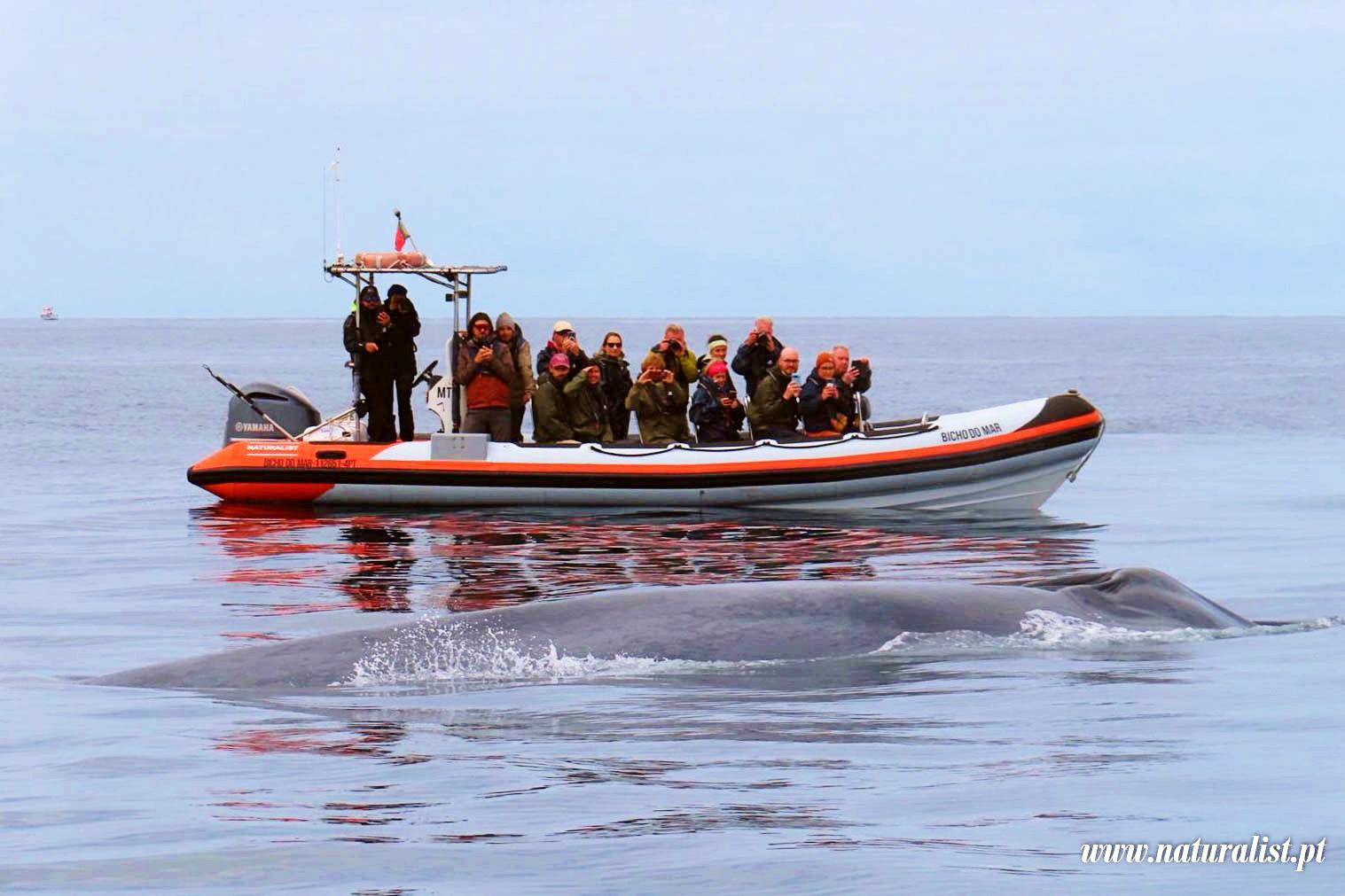
You board at Cais de Santa Cruz between 09:00 and 14:00, meeting your marine biologist guide in the booking office before stepping onto a rigid inflatable or research catamaran. The crew briefs you on approach protocols and safety procedures while the vessel clears the harbor breakwater, passing Monte da Guia's green volcanic cone on the port side. Within twenty minutes you reach the edge of Faial's submarine shelf, where the seafloor drops from 200 meters to over 2,000 in less than a mile. The spotter radios coordinates and your captain cuts the engine, drifting as a sperm whale surfaces 150 meters ahead, blowing a forward-angled spout before arching its back and raising its fluke for a deep dive. You wait in silence, hydrophone deployed, listening to the rhythmic clicks echo from 800 meters down. The biologist explains fluke markings and shows you the photo-ID catalog on a tablet, matching the whale you just saw to an individual named in 2009. A pod of common dolphins approaches from the stern, bow-riding and leaping in tight formation. You photograph their dorsal fins while the guide records encounter data: species, group size, behavior, GPS timestamp. After two hours you return to Horta, passing fishing boats anchored near the Pico channel, the mainland's dark silhouette visible across calm Atlantic water.

Frequently asked

Frequently asked questions about horta whale watching tour tours

What are the opening hours for the horta whale watching tour booking office?

The booking office for the horta whale watching tour is open from 09:00–20:00 daily.

Is the horta whale watching tour accessible for everyone?

The semi-rigid boats used for the horta whale watching tour are not suitable for pregnant women or individuals with back problems.

When is the best time to book horta whale watching tour tickets?

Summer is ideal for the horta whale watching tour due to calmer seas, but spring is best for migratory baleen whales.

Do I need to arrive early for my horta whale watching tour?

Yes, please arrive between 09:00–14:00 to ensure you are in time for scheduled briefings for your horta whale watching tour.

Are there prohibited items for the horta whale watching tour?

Drones and diving equipment are prohibited on the horta whale watching tour.

Can I take photos during the horta whale watching tour?

Yes, you are encouraged to photograph wildlife during your horta whale watching tour, provided you secure your gear.

Are food and drink provided on the horta whale watching tour?

Food and drinks are not included, so please plan your meals around the horta whale watching tour schedule.

Is the horta whale watching tour safe for families?

Yes, the horta whale watching tour is family-friendly, though children must be at least 5 years old.

What is the cancellation policy for the horta whale watching tour?

If a horta whale watching tour is cancelled due to weather, you will receive a full refund.